In a humid climate, air conditioning works better. Evaporative cooling needs dry air to do its job, so on the muggy days when you want relief most, an evaporative cooler loses much of its effect. Reverse cycle air conditioning keeps cooling in humid weather and heats in winter too. In the evaporative cooling vs air conditioning debate, evaporative wins on running costs in dry inland areas, but not in humid coastal regions like South East Queensland. Here is how the two compare and what to weigh up before you choose.
How Does Evaporative Cooling Differ From Air Conditioning?
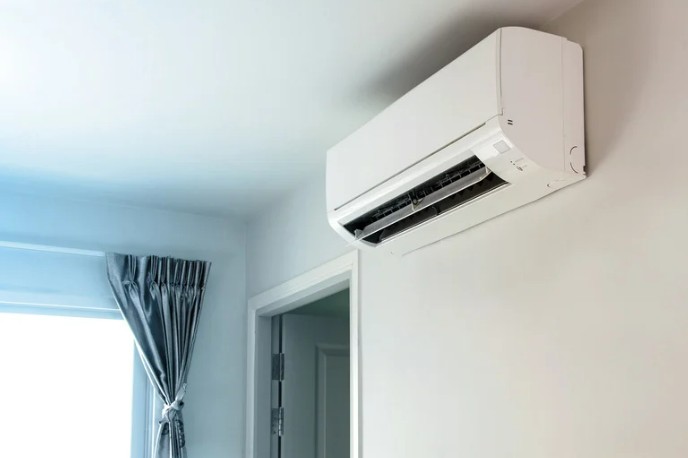
An evaporative cooler pulls outside air through a wet pad. As the water evaporates, it cools the air, and that air is blown through the house while the hot indoor air escapes through open windows and doors. An air conditioner works differently. It uses refrigerant to remove heat and moisture from the air inside a closed room, then recirculates it.
That difference is why the two behave so differently in humid weather. The Australian Government’s heating and cooling guide says evaporative coolers are not suitable for all regions and work well in low humidity inland areas. Our split system and ducted air conditioning options work the same way in any weather, because they do not rely on dry outside air.
Why Does Humidity Matter So Much?
In any evaporative cooling vs air conditioning comparison, humidity is the deciding factor. Evaporation only cools the air when the air can absorb more moisture. When it is already humid, there is little room for water to evaporate, so the cooling effect drops. You can end up with air that is only slightly cooler and noticeably damper, which feels sticky rather than fresh. The same government guide lists reduced effectiveness on humid days as one of the main trade offs.
In South East Queensland, humid days are common through summer. That is the main reason evaporative cooling is a better fit for places like inland Queensland, South Australia and western Victoria than for a coastal home.
Evaporative Cooling vs Air Conditioning: Which Is Cheaper to Run?
In the right climate, yes. The government guide says ducted evaporative coolers use around half the energy of an air conditioner of similar capacity. That is a real advantage where the cooler works well.
There are costs on the other side. Evaporative systems use water, up to 25 litres an hour according to the same guide, and YourHome recommends checking with your council for any restrictions on water use. A system that uses less electricity but cannot keep you comfortable on a humid afternoon is not much of a saving.
What About Heating in Winter?
Evaporative coolers only cool. A reverse cycle air conditioner handles both, so one system covers summer and winter. Winters in South East Queensland are mild, but cool mornings are real, and having heating built in means you do not need to buy and run a separate heater.
YourHome also points out that a built in evaporative system can push up heating bills. In the cooler months, when the cooler is switched off, warm air can leak out of the house through the ducting.
What About Windows and Air Quality?
An evaporative cooler needs open windows or doors so that the hot air has somewhere to go. That means the house cannot be closed up, which affects security, noise and how much outside air gets in. If the air outside carries dust, pollen or smoke, that comes inside with it.
An air conditioner works best with windows and doors closed. The air is recirculated through filters, so it suits people who want a sealed, controlled space, such as a bedroom at night.
Are There Other Options Worth Considering?
Ceiling fans cost very little to run and help in any system. Our ceiling fan installation team can add them to rooms where air movement helps, which can let you set an air conditioner a little higher and save energy.
What if I Already Have an Evaporative Cooler?
If your cooler is working well and you are happy with it, there is no need to change. If it is struggling, getting expensive to fix or leaving the house damp, we can look at it honestly. Our air conditioning repairs team also repairs evaporative coolers, and we will tell you whether a repair makes sense or whether replacing it with reverse cycle air conditioning would suit you better.
Which Should You Choose?
When it comes to evaporative cooling vs air conditioning for a humid, coastal home, reverse cycle air conditioning is usually the better choice. It cools reliably in humid weather, heats in winter and works with the house closed up. Evaporative cooling is a sensible option in dry inland climates, but humidity limits it on the coast.
If you are weighing up the two, we are happy to talk it through. At BG Electrical and Air Con we will look at your home and give you a straight recommendation, with no pressure to buy more than you need. You can read more about our air conditioning installation, or get in touch for a free onsite quote.