
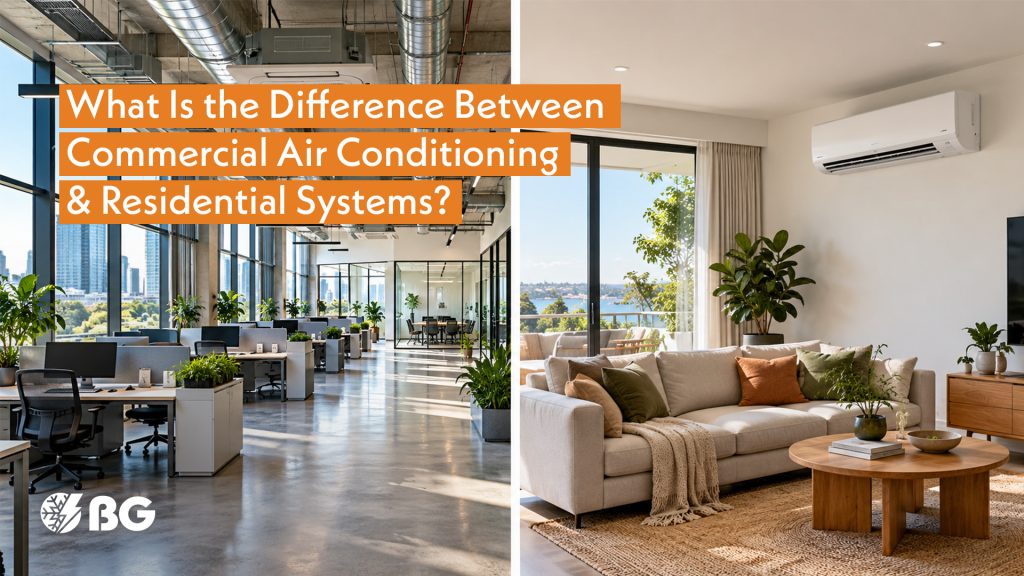
Commercial air conditioning is designed to cool larger, higher occupancy spaces such as offices, retail stores and warehouses, and it comes with stricter maintenance and compliance obligations than a home system. Residential systems are built for the scale of a house, with simpler compliance requirements and a more straightforward install. The two are not interchangeable, and using the wrong one for the job creates problems down the line, both for comfort and for compliance. As a licensed electrician and refrigeration mechanic who works across both residential homes and commercial properties in Brisbane, this is one of the more common questions I get from business owners weighing up their options.
Why Can’t a Business Just Use a Bigger Version of a Home Air Conditioner?
In theory you could install a larger split system or a bigger ducted setup in a commercial space, and for a small office or shop this sometimes happens. In practice, most commercial properties need something built for continuous use, higher occupancy loads and, in many cases, integration with a building’s fire and ventilation systems. Commercial air conditioning units are generally built tougher, run for longer stretches without rest, and are engineered to handle a much larger and more variable heat load than a typical home ever produces.
Do Commercial Systems Have Different Compliance Requirements?
Yes, and this is one of the biggest differences. Commercial air conditioners fall under Australian Standard AS/NZS 3666, which governs microbial control and hygiene in air handling systems, since poorly maintained commercial systems can circulate airborne contaminants to large numbers of people. A home split system has no such obligation, though regular servicing is still smart practice. Queensland businesses also have workplace health and safety obligations around thermal comfort and ventilation, which WorkSafe Queensland outlines in its heat stress guidance, and a system that is not maintained properly can leave an employer exposed if staff are working in poor conditions.
How Does Maintenance Differ Between Commercial and Residential Systems?
A home split system typically needs a service once a year, sometimes twice if it gets heavy use. Commercial air conditioning systems, particularly larger ducted and multi zone setups, usually require quarterly or even monthly checks depending on their size and how many people rely on them. Filters, coils and ductwork accumulate contaminants faster in a busy retail store or office than in a household, so the servicing schedule has to reflect that. SafeWork NSW’s guidance on workplace ventilation covers why consistent air quality matters in a commercial setting, and the same principle applies whether you are in Sydney or Brisbane.
Does a Commercial Install Cost More Than a Residential One?
Generally, yes. Commercial air conditioners handle a bigger heat load, and the equipment, ductwork and electrical work required to support them scales up accordingly. A small retail fitout might be a relatively modest job, while a larger office floor or warehouse installation involves significantly more planning, bigger units and more extensive electrical work to support the system safely. It genuinely depends on the size of the space and how it is used, which is why an onsite assessment matters far more for commercial jobs than a quick phone quote ever could.
What Types of Systems Are Common in Commercial Settings?
Larger commercial spaces often use ducted systems similar in principle to a residential ducted setup, just scaled up and frequently zoned across multiple tenancies or floors. Some businesses use multiple split systems throughout a building instead, particularly in strata titled offices or smaller retail tenancies where a single centralised system is not practical. Every property is different, and the right setup depends on the layout, the number of people using the space and the building’s existing electrical capacity.
Do You Need a Different Type of Electrician for Commercial Work?
Not a different type exactly, but commercial work does demand a higher level of care around compliance, safety and coordination with other trades, since these jobs often run alongside other contractors on a live business site. Our team holds full QBCC and ARCtick licensing along with the electrical qualifications needed to handle both the air conditioning and the electrical work that supports it, whether that is a switchboard upgrade to handle a new commercial system or wiring for a full office fitout.
Which One Does Your Property Actually Need?
If you are running a household, a well sized residential system will do the job properly. If you are running a business, whether that is a shopfront, office, strata building or warehouse, commercial air conditioning built for continuous use and higher compliance standards is the safer investment, both for your staff and your customers.
We have worked across residential homes, strata buildings and commercial properties throughout Brisbane for years, and you can read more about our licensing and background if you want to know exactly who will be turning up to your site. If you are unsure which category your property falls into or what system would suit your space, get in touch for a free onsite assessment and we will give you a straightforward answer, not a sales pitch.