Mitsubishi Heavy Industries Split Installer Review: Why the Ciara Split System Outperforms Expectations
May 5th, 2026
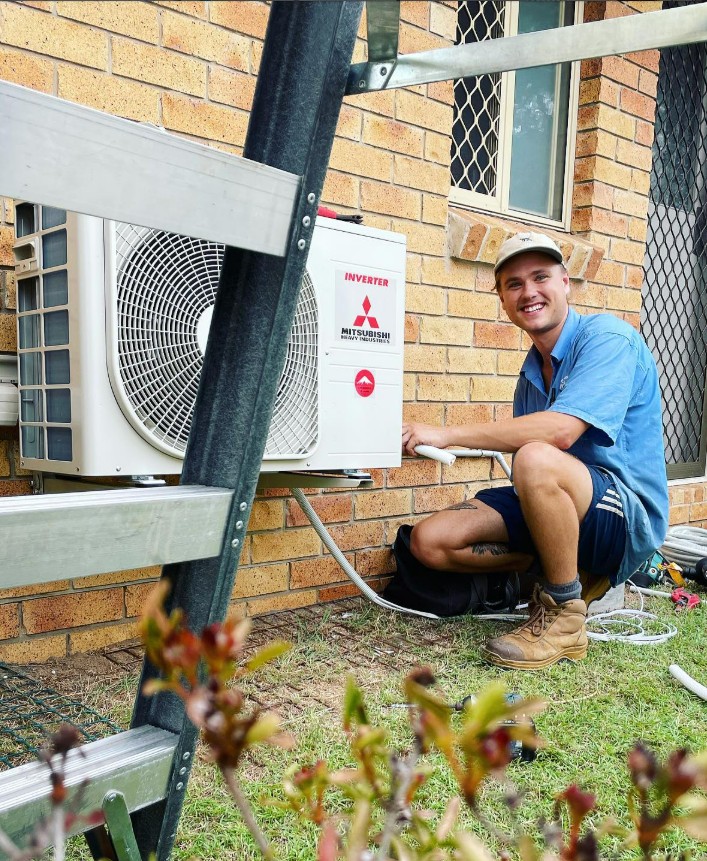
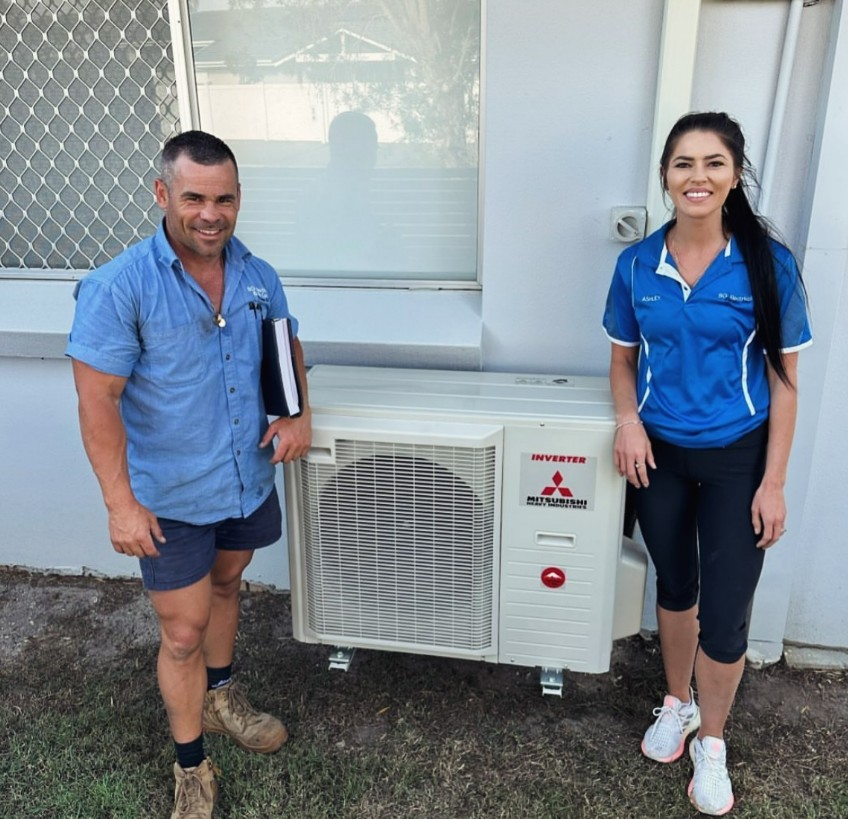
As a Mitsubishi Heavy Industries installer, I’ve worked with countless split systems, but the Ciara series stands out for all the right reasons.
This compact unit combines an elegant Italian design with practical features that make installation straightforward and performance reliable. With capacities ranging from 1.5kW to 7.1kW, the Mitsubishi Heavy Industries Ciara handles small to medium spaces effortlessly. In fact, what impressed me most wasn’t just the built-in Wi-Fi and voice control compatibility, but how the system delivers on its promises. Whether you’re a fellow Mitsubishi Heavy Industries installer or considering this unit, here’s why the Ciara exceeds expectations.
What Is the Mitsubishi Heavy Industries Ciara Split System?
Product Overview and Target Audience
The Mitsubishi Heavy Industries Ciara represents the latest wall-mounted split system in MHI’s lineup, specifically engineered for residential and commercial applications where space comes at a premium. During installations across various properties, I’ve noticed this series appeals to homeowners seeking climate control for bedrooms, home offices, and medium-sized living areas, while also serving small commercial spaces effectively.
What sets the Ciara apart in essence is its positioning. MHI designed this system for customers who value connected living without sacrificing performance. The built-in Wi-Fi adapter comes pre-installed in every unit, eliminating the need for additional hardware that other manufacturers charge extra for. Voice control compatibility works seamlessly with both Google and Alexa devices, which I’ve found particularly useful for clients wanting smart home integration.
Customer feedback supports what I’ve observed during installations. With a 4.7 rating from 137 reviews and a 92% positive response rate, the Ciara series has gained traction quickly. Buyers consistently mention whisper-quiet operation and fast cooling capabilities, with one user noting “their large lounge room cooled within 10 minutes when interior temperatures reached 35°C.”
Available Capacities: 1.5kW to 7.1kW
The Ciara series spans seven distinct capacity options, each matched to specific room requirements. Here’s how the lineup breaks down:
1.5kW model (DXK05ZTLA-WF): 1.5kW cooling, 2.0kW heating
2.0kW model (DXK07ZTLA-WF): 2.0kW cooling, 2.7kW heating
2.5kW model (DXK09ZTLA-WF): 2.5kW cooling, 3.0kW heating
3.3kW model (DXK12ZTLA-WF): 3.3kW cooling, 3.8kW heating
5.0kW model (DXK18ZTLA-WF): 5.0kW cooling, 5.8kW heating
6.3kW model (DXK21ZTLA-WF): 6.3kW cooling, 7.1kW heating
7.1kW model (DXK24ZTLA-WF): 7.1kW cooling, 8.0kW heating
The heating capacity consistently exceeds cooling output across all models, which proves particularly valuable for clients in colder climates. One Tasmania-based user reported running their Ciara unit 24 hours daily throughout winter with surprisingly economical power consumption.
Design and Build Quality
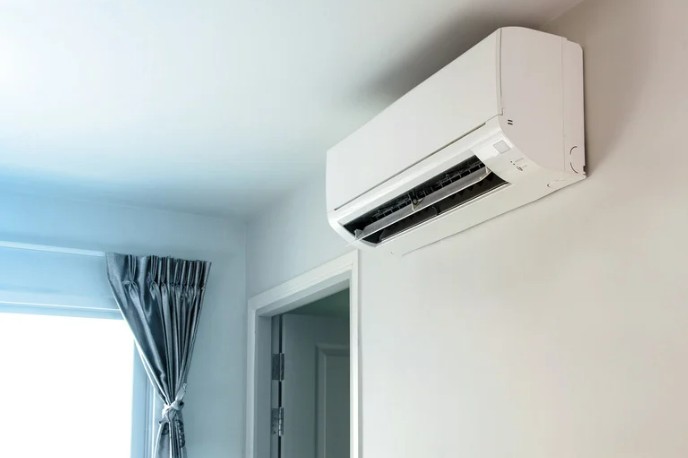
The Italian-inspired esthetic isn’t just marketing speak. Smooth curves and rounded contours replace the boxy profile common in budget split systems. At first glance, the sleek finish blends into wall spaces rather than dominating them, which several customers have appreciated on white walls.
Dimensions remain consistent across most models. The 2.5kW unit measures 294mm high, 798mm wide, and 210mm deep, while the indoor unit weighs just 8.5kg. Correspondingly, outdoor units maintain compact footprints at 540mm x 645mm x 275mm for smaller capacities. The 5.0kW outdoor unit increases slightly to 595mm high and 780mm wide, weighing 33kg.
This lightweight construction translates to installation flexibility. I’ve fitted Ciara units into existing apartment spaces and tight wall sections where heavier systems wouldn’t work. The polished finish resists fingerprints better than glossy alternatives, and the minimal nooks reduce cleaning complexity, as one reviewer specifically highlighted.
Build quality extends to component selection. Each unit ships with a backlit remote control featuring 0.5°C temperature increments, delivering more precise climate control than standard 1°C adjustments. The pre-charged refrigerant system includes 10 meters of charge, with pipe sizes at 6.35mm liquid and 9.52mm gas lines using R32 refrigerant.
Installer Experience: Why the Ciara Is Easy to Install
Compact Dimensions and Lightweight Design
Working with the Ciara has reinforced what installation efficiency looks like. The indoor unit at 8.5kg for the 1.5kW model weighs substantially less than competing systems I’ve installed. Outdoor units start at 22kg, progressing to 24kg for the 3.3kW capacity. This weight reduction matters when navigating tight stairwells or positioning units on older apartment balconies with weight restrictions.
The compact footprint opens installation possibilities that bulkier systems simply can’t match. I’ve positioned Ciara units in narrow hallways and repurposed wall spaces where previous tenants removed outdated systems. The 294x798x210mm indoor dimensions fit seamlessly into existing cutouts, reducing patching and repainting work.
Flexible Installation Options
Installation flexibility extends beyond physical dimensions. The maximum pipe length reaches 20 meters, accommodating properties where outdoor placement options are limited. On multilevel homes, the 15-meter maximum vertical height differential between indoor and outdoor units handles both scenarios: outdoor unit above or below the indoor component.
Rather than restricting placement, these specifications expand options. I’ve installed units in split-level apartments where the outdoor compressor sat on ground level while the indoor head mounted two floors up. The system maintained full performance without pressure issues or efficiency drops.
Pre-Charged Refrigerant System
The pre-charged configuration saves considerable installation time. Each unit arrives with R32 refrigerant pre-charged for 10 meters of piping. For the 1.5kW model, this includes 0.43kg of refrigerant, while the 3.3kW unit contains 0.59kg.
With this in mind, installations within the 10-meter range require no additional refrigerant charging. I simply connect the piping, vacuum the lines, and open the service valves. This eliminates the need for refrigerant scales, charging manifolds, and the time typically spent calculating and adding precise refrigerant quantities.
The standard 6.35mm liquid line and 9.52mm gas line match common piping sizes, allowing use of existing line sets in retrofit situations. When replacing older units, I’ve reused existing copper runs that met specification requirements, cutting material costs and installation duration.
Standard Accessories Included
Mitsubishi Heavy Industries packages each Ciara unit with essential installation components. The Allergen Clear Filter comes standard, eliminating the typical accessory purchase that other manufacturers charge separately. The pre-installed Wi-Fi adapter represents another included feature that competitors position as an upgrade.
Installation boards attach to the rear of each indoor unit, though documentation references vary across different MHI series. From my installations, the mounting template and hardware arrive packaged with the unit, streamlining the initial setup phase.
Optional interface kits (SC-BIKN2-E) and photocatalytic washable deodorizing filters are available for customers wanting enhanced functionality. Particularly for commercial installations, these optional components provide customization without requiring different base units.
Performance That Exceeds Expectations
Energy Efficiency Ratings (EER and COP)
Performance metrics tell one story on paper, but field testing reveals another. The 1.5kW Ciara achieves an EER of 4.29 and COP of 4.76, placing it among the more efficient residential units I’ve installed. Power consumption sits at just 0.35kW during cooling and 0.42kW for heating, which translates to roughly a quarter of the energy needed to boil a kettle.
The 2.5kW model maintains strong efficiency with an EER of 4.90 and COP of 4.92, while larger capacities naturally show lower ratings due to increased workload. The 5.0kW unit records an EER of 3.60 and COP of 3.89. One installer noted their customer’s power consumption remained remarkably low, equivalent to 0.25 times that required to boil water.
Efficiency ratings measured under controlled AS/NZS 3823 conditions don’t always reflect real-world performance. The inverter technology adjusts output based on actual room conditions rather than running at constant capacity, which improves seasonal efficiency beyond what EER and COP numbers suggest.
Cooling and Heating Capacity Range
The inverter range extends performance beyond nominal ratings. The 1.5kW model operates between 0.7kW and 2.5kW for cooling, expanding to 0.9kW-4.1kW when heating. This flexibility allows the unit to ramp down for gentle temperature maintenance or boost output during extreme conditions.
Larger models follow similar patterns. The 2.5kW unit spans 0.9kW to 3.5kW cooling and handles heating loads from 0.9kW to 5.2kW. Customer feedback supports these specifications. One user reported their unit cooled a large lounge room from 35°C internal temperature within 10 minutes on a 39°C day, demonstrating the system’s capacity to handle peak loads effortlessly.
Silent Operation: Indoor and Outdoor Noise Levels
Noise performance separates the Ciara from competing systems. Indoor operation ranges from 19 dB(A) at minimum fan speed to 43 dB(A) at maximum across most models. The 1.5kW unit operates even quieter, measuring 35-27-22-19 dB(A) across its four fan speeds.
Outdoor units maintain sound power levels between 56 and 62 dB(A), with two levels of silent mode available for further noise reduction. Multiple customers described the system as “whisper quiet,” with one specifically noting “they forget the unit operates unless fan speed increases to maximum.” Another bedroom installation proved so quiet the homeowner couldn’t tell when the system was running.
Built-In Features That Set It Apart
Wi-Fi and Voice Control Integration
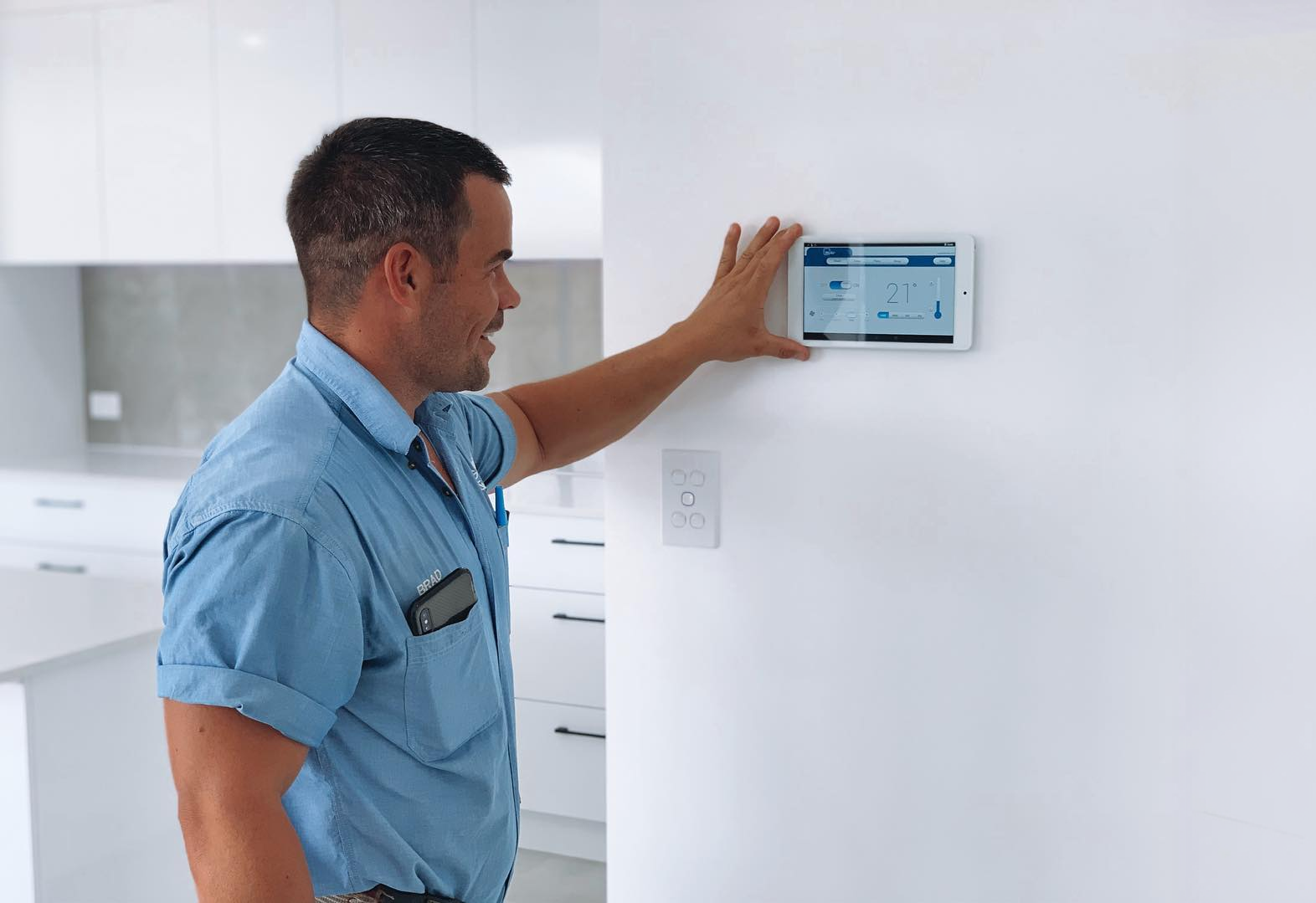
The built-in Wi-Fi adapter eliminates additional purchases that competitors charge separately. Through the Smart M-AIR App, customers control temperature settings, establish weekly timers, receive notification alerts like shut-off reminders, and monitor power usage. During post-installation walkthroughs, I’ve demonstrated these functions to clients who appreciate controlling their system remotely.
Voice control compatibility works with both Google Home and Amazon Alexa devices. Commands adjust temperature, switch operating modes, or check current settings without manual intervention. One customer mentioned using voice commands while cooking or carrying shopping, finding it more convenient than reaching for the remote.
Clean Air Technology and Allergen Clear Filter
The Allergen Clear Filter captures airborne particles including hair, pollen, and dust before neutralizing them alongside bacteria using specially formulated enzymes. This multi-stage operation activates enzymes within the filter design, suppressing allergens through chemical action rather than simple mechanical filtration.
Notably, this filter comes standard rather than as an optional upgrade. The enzyme-based approach differs from basic electrostatic filters I’ve seen in competing systems, offering active neutralization instead of passive capture alone.
Fuzzy Auto Mode and Economy Mode
Fuzzy logic algorithms determine operating mode and temperature settings automatically, adjusting inverter frequency based on room conditions. The system analyzes multiple variables simultaneously, selecting cooling, heating, or fan-only operation without user input.
Economy Mode operates at slightly reduced capacity to lower power consumption while maintaining comfortable temperatures. This proves particularly useful for clients wanting overnight operation without excessive energy draw. The unit maintains climate control at reduced output rather than cycling on and off repeatedly.
3D Auto Airflow and Jet Air Technology
The 3D Auto Airflow system operates three independent motors, distributing airflow evenly across entire rooms. This one-touch program coordinates horizontal and vertical louver movement alongside the main fan, preventing hot or cold spots.
Jet Air Technology applies fan blade engineering from aviation development. These advanced blades deliver powerful airflow while maintaining the quiet operation levels mentioned earlier. The design efficiently moves air without the turbulence noise typical of high-velocity systems.
Self-Clean and Auto Restart Functions
Self-Clean Operation dries the indoor unit’s filter and internal components after use, preventing mold growth. This automatic function runs after shutdown, extending filter life and maintaining air quality between manual cleanings.
The Auto Restart Function restores operation automatically after temporary power loss, resuming the same operating mode that was active before interruption. For clients in areas with unreliable power supply, this feature eliminates the need to reprogram settings after each outage.
Real-World Value: What Mitsubishi Heavy Industries Installers Say
Reliability and Build Quality
Feedback from fellow Mitsubishi Heavy Industries installers aligns with what I’ve witnessed during service calls. Units installed five to seven years ago continue operating without major issues. One installer replaced three older split systems with MHI units over two years, reporting consistent temperature maintenance and reduced power consumption compared to previous models. Equally important, the Ciara handles consecutive days of extreme heat without performance degradation, as verified by customers running units during sustained 30-40°C conditions.
Customer Satisfaction Rates
Canstar Blue named Mitsubishi Heavy Industries as having the most satisfied customers of any air conditioner brand for 2021. The 2020 award came from surveying over 1,000 participants, with MHIAA receiving the only five-star rating for overall satisfaction. These recognition patterns span multiple years, with MHI winning the Finder Awards for best split system brand three consecutive years through 2023.
Warranty and Support
All residential installations include five years of parts and labour coverage. This warranty applies to manufacturing defects, materials, and workmanship issues. The coverage aligns with industry standards while backed by MHIAA’s Australia-focused manufacturing approach. Warranty service requests proved prompt in most cases, though resolution timeframes varied.
Comparison to Competitor Split Systems
Installers generally distinguish between Mitsubishi Heavy Industries and Mitsubishi Electric, with the latter commanding premium pricing for residential applications. MHI positions itself differently, focusing on budget and commercial systems alongside residential units. When compared to Daikin and Fujitsu, most installation failures stem from sizing errors or drainage issues rather than brand-specific defects. The straightforward reality is that proper installation quality matters more than brand selection for long-term reliability.
Conclusion
Overall, the Ciara series delivers exactly what installers need and what customers expect. The combination of straightforward installation, reliable performance, and built-in Wi-Fi makes it stand out, especially at its price point. I’ve found myself recommending the 2.5kW and 3.3kW models most frequently, as they handle typical Australian rooms efficiently without oversizing.
The whisper-quiet operation and genuine energy efficiency prove the system backs up its specifications. While MHI doesn’t carry the same premium reputation as Mitsubishi Electric, the Ciara performs equally well for residential applications. Due to the five-year warranty and consistent customer satisfaction ratings, this split system represents solid value for homeowners and small commercial spaces alike.
FAQs
Q1. How reliable are Mitsubishi Heavy Industries air conditioners?
Mitsubishi Heavy Industries air conditioners have earned strong reliability ratings, with the Bronte series achieving a 4.7-star rating from 927 reviews on ProductReview, making it one of the highest-rated split systems available. The Ciara series similarly demonstrates consistent performance, with units installed 5-7 years ago continuing to operate without major issues.
Q2. What warranty coverage does the Mitsubishi Ciara split system include?
The Mitsubishi Ciara comes with a comprehensive 5-year parts and labor warranty for all residential installations. This warranty covers manufacturing defects, materials, and workmanship issues, demonstrating the manufacturer’s confidence in product quality and commitment to customer support.
Q3. How does Mitsubishi Heavy Industries compare to Daikin for air conditioning?
The choice between Mitsubishi Heavy Industries and Daikin depends on your priorities. Daikin excels in energy savings for systems running year-round with steady, long-term use. Mitsubishi Heavy Industries focuses on comfort, whisper-quiet operation, and superior airflow control in specific rooms, making it ideal for residential applications where noise levels and precise climate control matter most.
Q4. What’s the difference between Mitsubishi Heavy Industries and Mitsubishi Electric?
While both brands offer quality air conditioning systems, Mitsubishi Electric typically commands premium pricing for residential applications. Mitsubishi Heavy Industries positions itself differently, focusing on budget-friendly and commercial systems alongside residential units, delivering comparable performance at a more accessible price point for homeowners.
Q5. Is the Ciara split system energy efficient?
Yes, the Ciara demonstrates strong energy efficiency across its range. The 2.5kW model achieves an EER of 4.90 and COP of 4.92, with power consumption as low as 0.35kW during cooling. The inverter technology adjusts output based on actual room conditions, improving seasonal efficiency beyond standard ratings and resulting in economical operation even during continuous use.
Air conditioning is usually good for your health, especially when you live in a hot, humid climate like Brisbane’s. However, the effects of air conditioning on your health depend on how you use and maintain it. In this article, you’ll learn what air conditioning does for your body. We’ll also explain how to use it […]
Zoning lets one ducted system treat different parts of a home differently. Imagine setting the right indoor temperature that suits everyone. Honestly, that is as close to the definition of a near-impossible task as you can get. Each of us may have individual cooling and heating needs and there is no one comfortable indoor temperature […]
Saw water leaking from your AC unit? You’re not alone. This issue usually happens when the condensate drain line is blocked, though several other factors could be at play. If you don’t fix your AC, the water leaking from it could reach its electrical components, stain your walls and ceilings, encourage mould growth, or damage […]
Cleaning your air conditioner filter regularly improves the AC’s performance, reduces how much energy it consumes, and extends its lifespan. You’ll also breathe in healthier air when you’re indoors. The cleaning process is way easier than you think. Let’s walk through it together. Do these before cleaning your AC Turn off the air conditioner Safety […]
You set a target temperature of 23°C. Minutes later, you raise it to 24°C. That 1°C increase may seem minor, but it makes a big difference in the air conditioner’s energy consumption. Generally, for every 1°C increase in the target temperature, an AC’s energy usage drops by 5–10%. For homeowners in Australia, even slight AC […]
You want to find the perfect climate control solution for your home. But there’s just a bit of a snag: you can’t seem to choose between a ducted air conditioner and a split system. Ducted systems are a great fit for you if you’d like to maintain the same temperature across all rooms in your […]
The math should be straightforward: find out how many watts you need per square metre and multiply that by the floor area of your room. In reality, the answer is rarely that simple. Most commercial calculators recommend 3.5 to 5 kilowatts for a 30 square metre room, which is a typical range, yet you can’t […]
Operating quietly and reducing energy consumption by up to 44%, inverter air conditioners are easy to sell. An inverter air conditioner owes its energy efficiency to advanced inverter technology that allows the compressor to adjust its speed based on your cooling needs. That said, choosing an inverter AC isn’t always a no-brainer. There are still […]