
The Ultimate Guide to
Air Conditioning Types
Australians spend a whopping $3.7 billion on air conditioning during summer.
This massive investment makes it vital to understand the air conditioning options available in the market and to make smart decisions when purchasing one.
Your home’s size, layout and energy needs play a big role in picking the right air conditioning system.
Air conditioning systems have become essential to modern living, boosting our comfort levels and work efficiency. Split systems lead the pack as Australia’s most popular choice, but there are many more options for you to consider.
As experts in Brisbane air conditioning, we can help you understand the pros and cons of everything from quick-working split systems to adaptable ducted refrigerated options and smart air conditioning technologies.
Whether you plan to upgrade your current system or install a new one, our guide will help you pick what works best for you.
Table of Contents
Split System Air Conditioners
Split systems rule the Australian air conditioning market. Millions of homes depend on this technology to beat the summer heat.
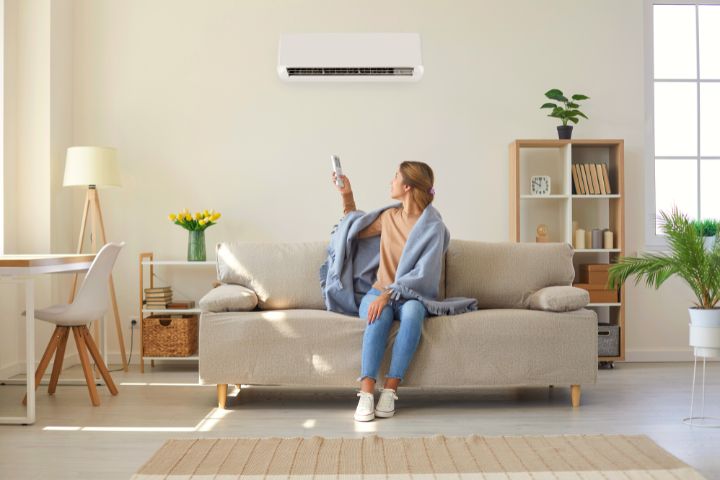
These systems have two main parts: an indoor unit on the wall and an outdoor compressor unit that work together to control the climate in homes and businesses.
What is Split System Air Conditioning?
The way split system air conditioners work is pretty simple.
The indoor unit pulls warm air from your room and runs it over an evaporator coil.
This coil cools the refrigerant gas and sends cooled air back into your space. The outdoor unit takes care of pushing out all the heat that’s been collected.
Both units connect through a small hole in the wall, with refrigerant and electrical wiring, so you don’t need any large ductwork.
Split System Air Conditioner Breakdown
These systems are budget-friendly powerhouses. Some models can reach up to a 7-star energy rating.
Running costs are low too, just 25-35 cents per hour to cool a medium-sized room.
The benefits don’t stop there:
- Advanced filters trap allergens and fine particles
- Indoor units run whisper-quiet
- Settings help reduce room humidity
- Quick response times for cooling or heating
- Temperature control for each unit in multi-split setups
- Smart features include movement sensors and app control
Split systems have their drawbacks too. The outdoor compressor makes noise that might bother your neighbours or light sleepers. The right spot for this unit matters a lot for keeping peace in the neighbourhood.
Your installation costs might go up if the indoor and outdoor units need to be far apart. The system only works with air that’s already inside, which might not work for you if fresh air is your priority.
Some homeowners don’t like how the wall-mounted indoor units look in their space. The system needs regular care too. You should clean the filters every couple of months and get professional service yearly to keep everything running smoothly and extend its life.
Ducted Air Conditioners
Brisbane homeowners are choosing ducted air conditioning systems as a premium solution to control their home’s climate.
These detailed systems work quietly behind the scenes and deliver consistent temperatures in every room.
What is Ducted Air Conditioning?
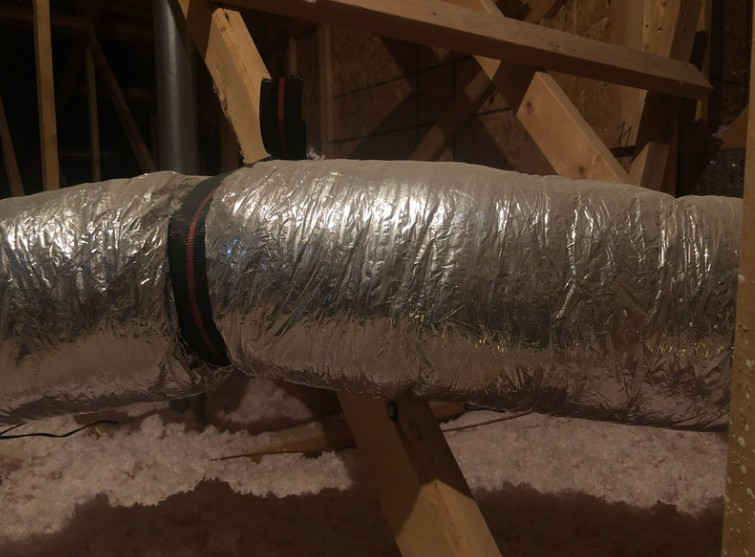
A ducted refrigerated air conditioning system cools or heats your entire home through ducts and vents in the ceiling or floor.
The system has an indoor unit usually placed in the roof space and an outdoor unit outside the home.
This setup uses a refrigeration cycle to change air temperature by cycling refrigerants between liquid and gas states.
The system pulls warm air through a return air grille and moves it over evaporator coils containing refrigerant. The refrigerant absorbs heat from the air, cools it, and sends it throughout the home through strategically placed ducts.
These systems also work as reverse cycle units that provide both heating and cooling all year.
Ducted Air Conditioner Breakdown
Ducted systems excel at keeping consistent temperatures throughout your home.
They eliminate hot and cold spots and create comfortable conditions in every room, unlike single-room units.
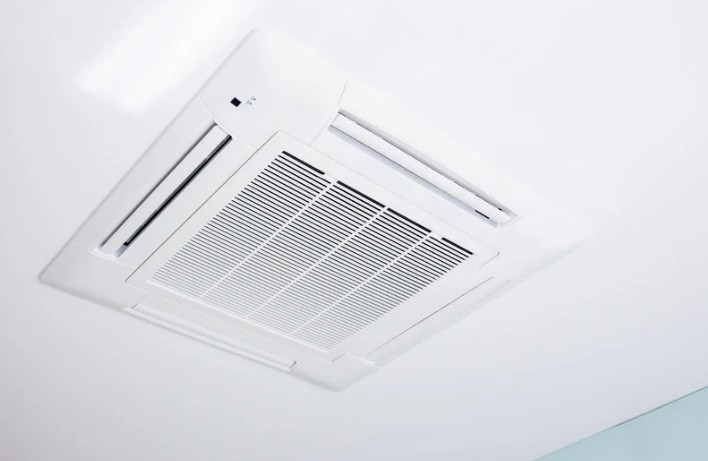
These systems look great in any home. The indoor unit and ductwork stay hidden in the ceiling or bulkhead, leaving only subtle grilles visible. Your home’s interior design remains intact as these systems practically “vanish into thin air”.
Other notable benefits:
- The system runs quietly without disturbing your sleep or daily activities
- Built-in filtration systems enhance air quality
- Energy costs stay low, especially with zoning options
- You can control different zones separately and cool only the areas you use
The biggest challenge is the upfront cost since ducted systems need a larger investment than other air conditioning types.
Your home needs enough roof space because some properties don’t have room for the ductwork and indoor unit. Repairs and maintenance might cost more because of the system’s complexity.
Common technical problems include air leaks through poorly connected joints, dirt getting in through gaps in ductwork, and lost efficiency from poor insulation.
Getting the right system size matters too: an oversized system wastes power while an undersized one doesn’t cool your home properly.
Reverse Cycle Ducted Systems
Reverse cycle ducted systems are the most complete air conditioning technology you can find in Brisbane.
These systems provide year-round climate control with a single installation, unlike standard heating or cooling units.
What is Reverse Ducted Air Conditioning?
The core of these systems is a refrigeration cycle that switches between heating and cooling.
You’ll find four main parts working together:
- An evaporator absorbs heat
- A compressor pressurises the refrigerant
- A condenser releases heat
- An expansion valve controls refrigerant flow
The system pulls heat from your indoor air and sends it outside during summer. When winter comes, it does the opposite, taking heat from outdoor air and warming your home, even when it’s as cold as -15°C outside.
Reverse Ducted Air Conditioner Breakdown
The most important advantage you get with these systems is two-in-one functionality.
You won’t need separate heating and cooling units. These systems are super efficient.
For each kilowatt of electricity they use, they create three or more kilowatts of heating or cooling power. Here are some other great benefits:
- Your entire property stays at the same temperature
- You’ll only see neat vents since ducts hide in ceilings or floors
- You can set different temperatures in different areas
- Built-in filters catch airborne particles in many systems
These systems come with high upfront costs for buying and installing. Installing them in existing homes can be tricky because you need enough space in your ceiling or under the floor for ductwork.
There’s another reason to think carefully: air might leak if the ducts aren’t sealed properly or maintained well, which makes the system less efficient and uses more energy.
You’ll also need regular maintenance, and residential systems need new filters about every 12 months.
These systems provide complete climate control, but they might be overkill for smaller properties. Split systems or portable options could be more economical solutions in these cases.
Multi Head Split System Air Conditioning
Multi head split systems give homeowners a great way to cool multiple rooms without dealing with complex ducted systems.
These systems have become a popular choice that fills the gap between basic split systems and complete ducted installations, making them perfect for modern homes.

What is Multi Head Split System Air Conditioning?
A multi head split system uses one outdoor unit that connects to several indoor units placed in different rooms or zones.
Unlike basic split systems that use a one-to-one setup, multi-head systems let you connect up to eight indoor units to a single outdoor unit. The indoor units (head units) link to the outdoor unit through refrigerant lines and wiring.
The system’s power is shared among all active indoor units, which can reduce each unit’s cooling capacity when they run together.
Multi Head Split System Air Conditioner Breakdown
Multi head split systems come with several key benefits:
- You need just one outdoor unit to cool multiple rooms, which works great for homes with limited exterior space
- Every indoor unit works independently, so you can set different temperatures in each room
- Fewer outdoor units make your home’s exterior look cleaner
- You can choose from wall-mounted units, ceiling cassettes, and floor consoles
- The ability to turn off unused rooms while keeping others comfortable saves power
Multi-head systems do have some drawbacks. The original cost is higher than for single split systems, though they become affordable when cooling multiple rooms.
On top of that, longer refrigerant lines make installation trickier and can lower system efficiency. The biggest problem comes from having one outdoor unit. If it fails, none of the indoor units will work.
The system also might not reach full cooling power when all indoor units run at once because they share the outdoor unit’s capacity.
Smart Air Conditioning Systems
Smart technology has made its way faster into home climate control and created a new category in the air conditioning market.
The Australian smart HVAC market will grow by a lot in the coming years. Tech-savvy homeowners should consider these intelligent cooling solutions.
What Makes an Air Conditioner ‘Smart’?
Traditional and smart air conditioners differ mainly in their connectivity features.
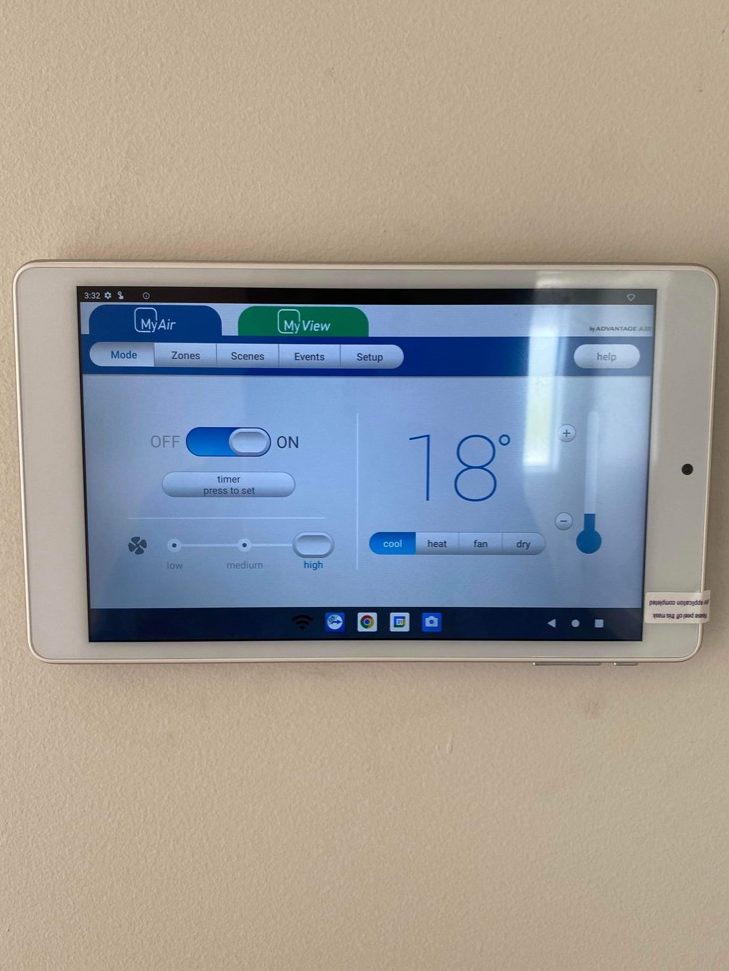
A smart air conditioner connects to your home’s Wi-Fi network. You can manage it remotely through smartphones, tablets, or voice assistants.
Smart air conditioners must have these distinct features:
- Internet connectivity (typically Wi-Fi)
- Remote control through smartphone apps
- Integration with smart home ecosystems
- Advanced sensors for temperature, humidity, and occupancy
- Knowing how to learn and adapt to user priorities
These systems work as standalone smart units or by modernising existing air conditioners with smart controllers.
Smart Air Conditioner Breakdown
Smart air conditioning’s biggest advantage is better energy efficiency.
Smart systems give you detailed energy usage data that helps identify patterns and optimise consumption. Studies show smart control systems save between 9% and 10% in HVAC operational costs compared to traditional systems.
Remote access is another major benefit. You can control your air conditioner from anywhere. Turn it on before coming home or adjust settings without leaving your bed.
Smart scheduling lets you customise based on daily routines, so you get perfect temperature settings right when you need them.
Here are more key benefits:
- Voice control works with Google Home and Amazon Alexa
- Geofencing technology adjusts climate control based on your location
- System sends maintenance alerts and filter replacement reminders
- Better air quality monitoring and management
Multi-head systems do have some drawbacks. The original cost is higher than for single split systems, though they become affordable when cooling multiple rooms.
On top of that, longer refrigerant lines make installation trickier and can lower system efficiency. The biggest problem comes from having one outdoor unit. If it fails, none of the indoor units will work.
The system also might not reach full cooling power when all indoor units run at once because they share the outdoor unit’s capacity.
Wall Mounted Air Conditioning
Australian homes and businesses commonly use wall-mounted air conditioners as a quick cooling solution for specific rooms.
These units, which people call in-wall or through-the-wall air conditioners, work differently from split systems in how they’re installed and operated.
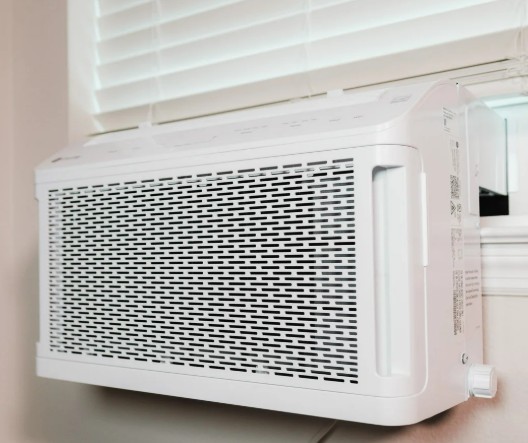
What is Wall Mounted Air Conditioning?
A wall mounted air conditioner is a single, self-contained unit that sits in a framed exterior wall opening within a containment sleeve.
The system pulls warm room air in, cools it over refrigerant coils, and pushes the heat outside. These systems save window space and stay in place year-round, unlike window units.
The unit needs a hole cut into the external wall. This makes it a permanent fixture, though most containment sleeves come with covers that blend with the wall’s paint if removed.
Wall Mounted Air Conditioner Breakdown
Wall mounted air conditioners serve specific purposes despite not being ideal for cooling entire homes.
They work great in rooms without existing ductwork, such as converted garages or new additions. The units also make sense in spaces that people use occasionally, where cooling the whole house would waste energy.
These units offer a simple cooling solution to homeowners with tight budgets or those who can’t install complex systems.
Renters often choose them because they don’t require permanent ductwork changes that landlords might not allow.
Wall-mounted units face several challenges that make other air conditioning types more appealing:
-
- These units only cool small spaces like a single bedroom or sunroom
-
- Regular filter cleaning and aircon servicing keep the unit running smoothly.
-
- Poor installation or sealing can let cool air escape outside
-
- The units use less power than window units but don’t match modern split systems’ efficiency
-
- These units stand out on walls and might clash with interior design
Choose the Right Air Conditioning System for Your Needs
Brisbane’s weather creates a real need for reliable cooling, and each system type meets this challenge in its own way.
Your lifestyle, home design, and budget will point you toward the right choice. Note that professional installation will give you the best performance, no matter which system you pick.
Choosing the right air conditioner can be overwhelming, but it doesn’t have to be.
At BG Electrical & Air Con, we’ll take the time to understand your home, your lifestyle and your budget to recommend a cooling solution that truly works for you. From tailored advice to expert installation, we’re here to make the process easy and stress-free.